What is Vulnerability Management?
Learn how to continuously identify, prioritize, and fix security weaknesses before attackers exploit them.
Table of Contents
Introduction
In today’s digital landscape, organizations face an ever‑growing number of cyber threats. Hackers are constantly scanning for weaknesses, and a single unpatched vulnerability can lead to a devastating breach. This is where vulnerability management comes in.
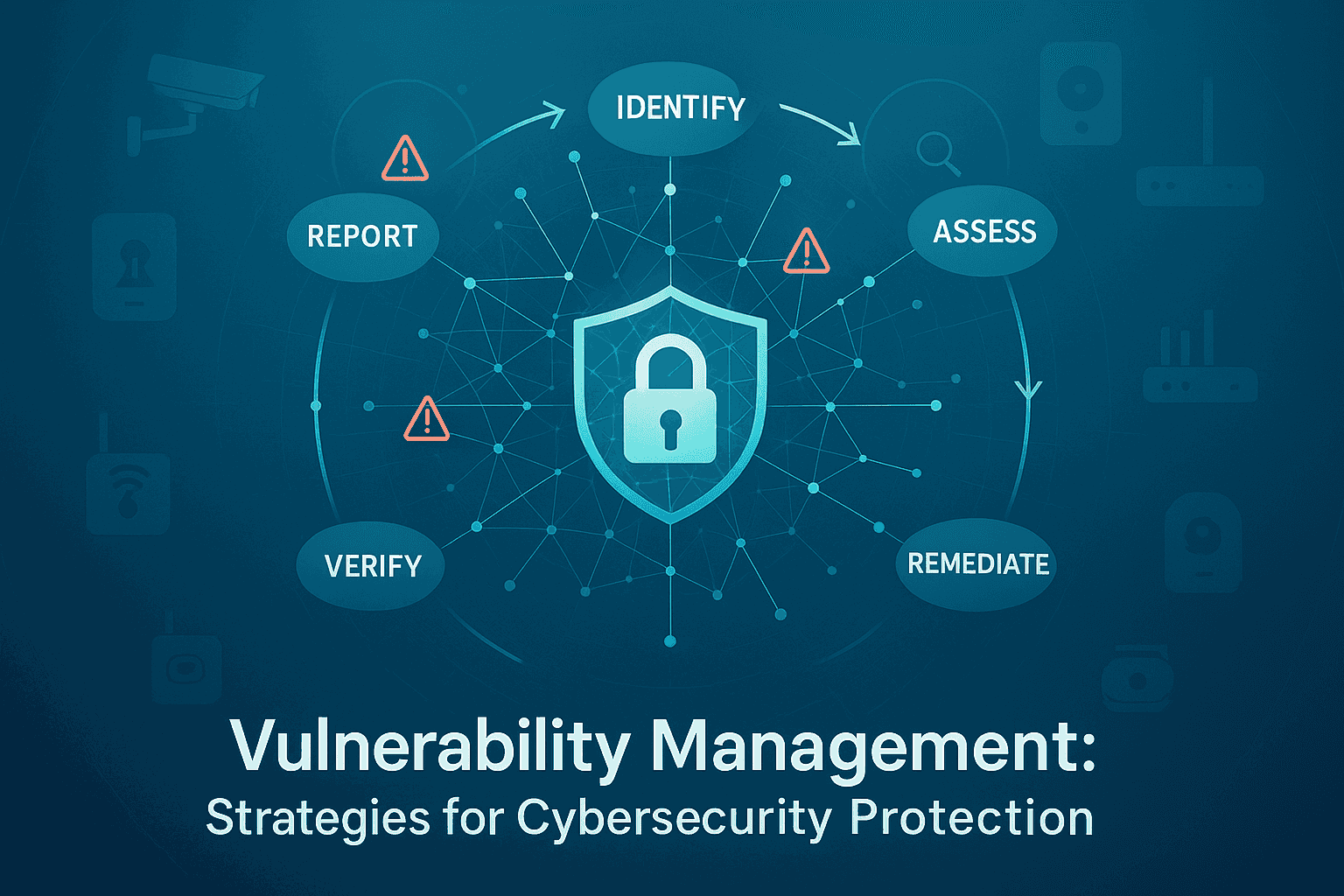
Vulnerability management is the ongoing process of identifying, evaluating, treating, and reporting security vulnerabilities in systems and software. It’s not a one‑time scan; it’s a continuous cycle that helps organizations stay ahead of attackers.
Key Concepts: Vulnerability, Threat, Risk
To understand vulnerability management, you first need to grasp three core terms:
Vulnerability
A weakness in a system, application, or process that could be exploited by a threat actor. Example: an unpatched software bug.
Threat
Any potential danger that could exploit a vulnerability. This includes hackers, malware, or even natural disasters.
Risk
The likelihood that a threat will exploit a vulnerability and the potential impact. Risk = Threat × Vulnerability × Impact.
Vulnerability management focuses on reducing risk by addressing vulnerabilities before they can be exploited.
The Vulnerability Management Lifecycle
A robust vulnerability management program follows these five continuous steps:
- Asset Discovery: Know what you have. Inventory all hardware, software, and cloud assets.
- Vulnerability Scanning: Use automated tools to scan assets for known vulnerabilities (CVEs).
- Risk Prioritization: Not all vulnerabilities are equal. Prioritize based on exploitability, asset criticality, and business impact.
- Remediation: Apply patches, configuration changes, or compensating controls to fix vulnerabilities.
- Verification & Reporting: Re‑scan to confirm fixes and report on risk reduction over time.
“Security is not a product, but a process.” – Bruce Schneier
Why Vulnerability Management Matters
- Reduce Attack Surface: By fixing known weaknesses, you shrink the opportunities for attackers.
- Compliance: Many regulations (PCI DSS, HIPAA, ISO 27001) require regular vulnerability assessments.
- Proactive Security: Shift from reactive patching to a continuous improvement mindset.
- Cost Savings: Preventing a breach is far cheaper than dealing with its aftermath.
Best Practices for Effective Vulnerability Management
1. Automate Scanning
Use tools that run scans daily or weekly to stay current.
2. Prioritize Based on Risk
Don't fix everything—fix what matters most to your business.
3. Establish SLAs
Define timeframes for patching critical vs. low severity issues.
4. Integrate with DevOps
Shift left: include vulnerability scanning in CI/CD pipelines.
Common Vulnerability Management Tools
| Tool | Purpose |
|---|---|
| Nessus | Widely used vulnerability scanner |
| Qualys | Cloud‑based vulnerability management platform |
| Rapid7 InsightVM | Real‑time vulnerability management with analytics |
| OpenVAS | Open‑source vulnerability scanner |
Conclusion
Vulnerability management is the cornerstone of modern cybersecurity. By continuously discovering, prioritizing, and remediating weaknesses, you can significantly reduce your organization’s risk profile. Remember, it’s not a one‑time project but an ongoing discipline.
Start small: inventory your assets, run a scan, and fix the top few critical issues. Over time, build a mature program that aligns with your business goals. Your future self (and your security team) will thank you.
Ready to take control of your vulnerabilities?
Let VULNERA help you automate and optimize your vulnerability management process.
Get Started